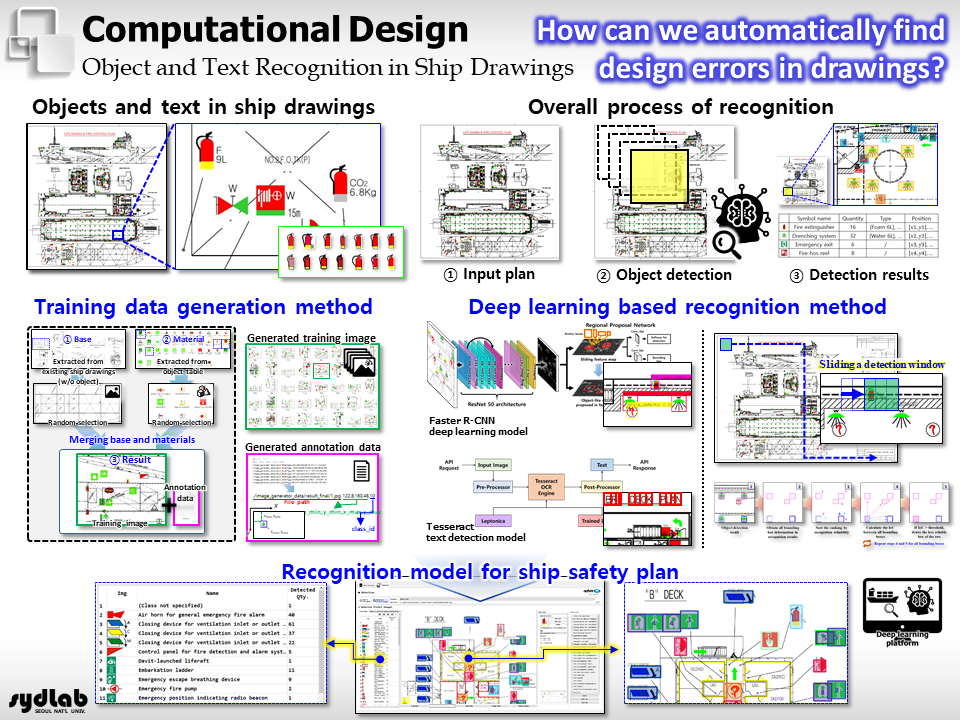
We are studying methods to accurately recognize various objects and text within drawings. Based on the recognition results, we automatically detect errors in the drawings by comparing them against design specifications. To this end, we are leveraging the latest deep learning technologies and fine-tuning them for the naval architecture and ocean engineering sectors. Applying this technology can dramatically reduce the time and effort required for drawing review.
– Generating virtual drawings for training deep learning models – Object recognition techniques (CNN, Transformer, etc.) – Text recognition techniques – Techniques for recognizing design information (e.g., compartments) within drawings
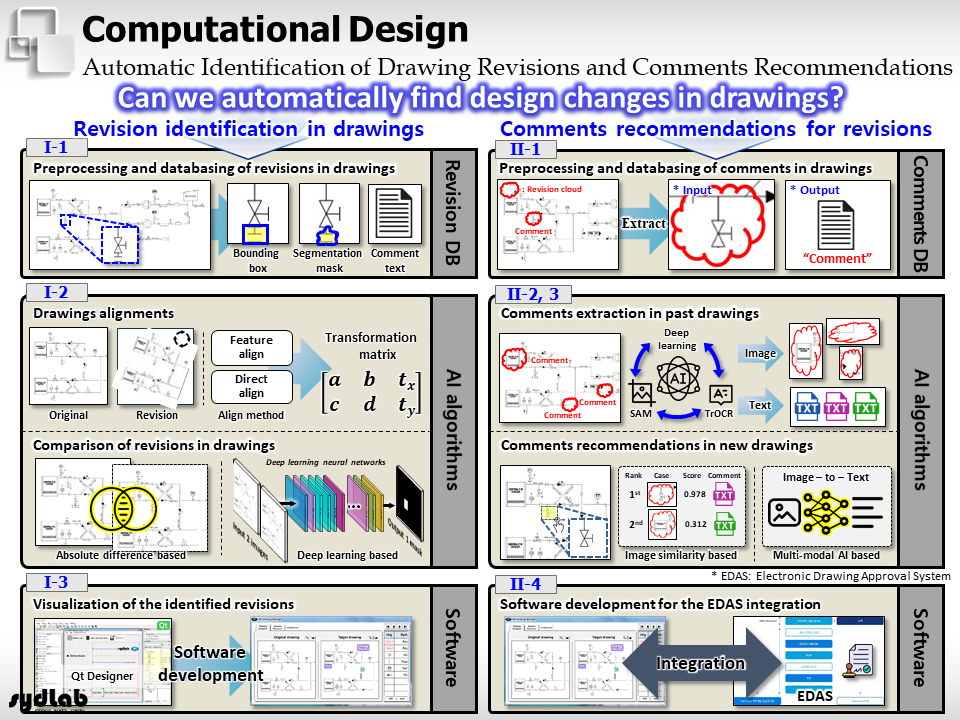
Identification of Drawing Revisions
We are studying methods to automatically identify revised sections in drawings that undergo repeated revisions between designers and classification surveyors during the shipbuilding process, and to automatically recommend review comments for those sections. To this end, we are leveraging the latest deep learning technologies and fine-tuning them for the naval architecture and ocean engineering sectors. Applying this technology can dramatically reduce the time and effort required for drawing revision work.
– Generation of virtual drawings and revision review comments for training deep learning models – Identification of revised sections using change detection technology – Recommendation of revision review comments using multi-modal AI
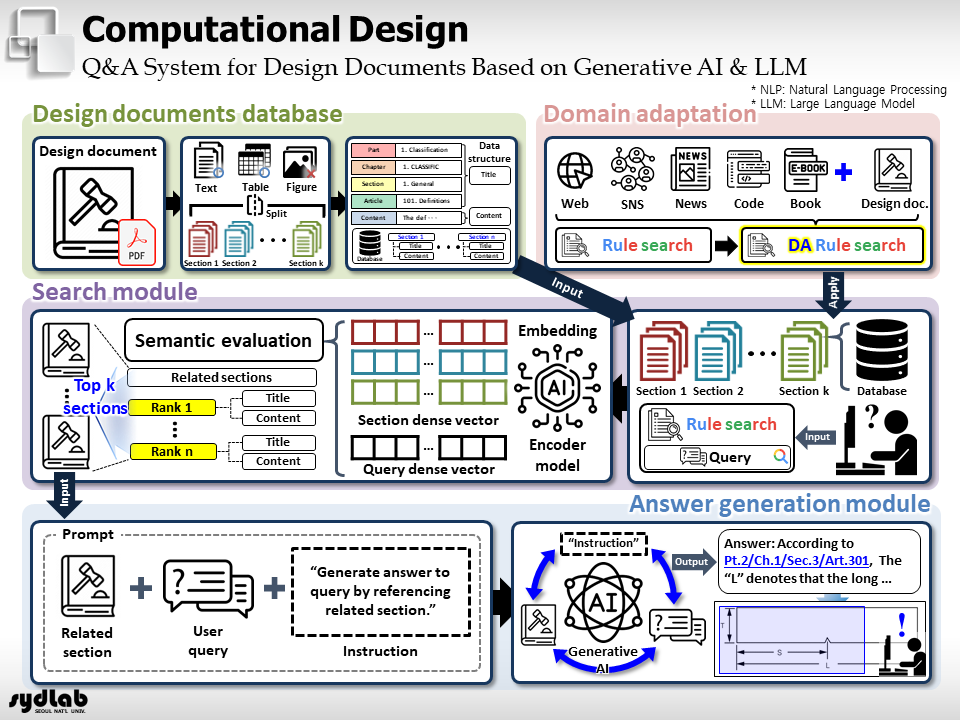
Q&A System for Ship Design
We are developing a Q&A system specifically designed for ship design. We aim to accurately provide designers with the various design knowledge and regulations they need by leveraging generative AI and large language models.
– Module for digitizing design documents into a database – Search module applying domain adaptation – RAG (Retrieval Augmented Generation)-based response generation module – Supports various documents, including design documents, design regulations, and design textbooks
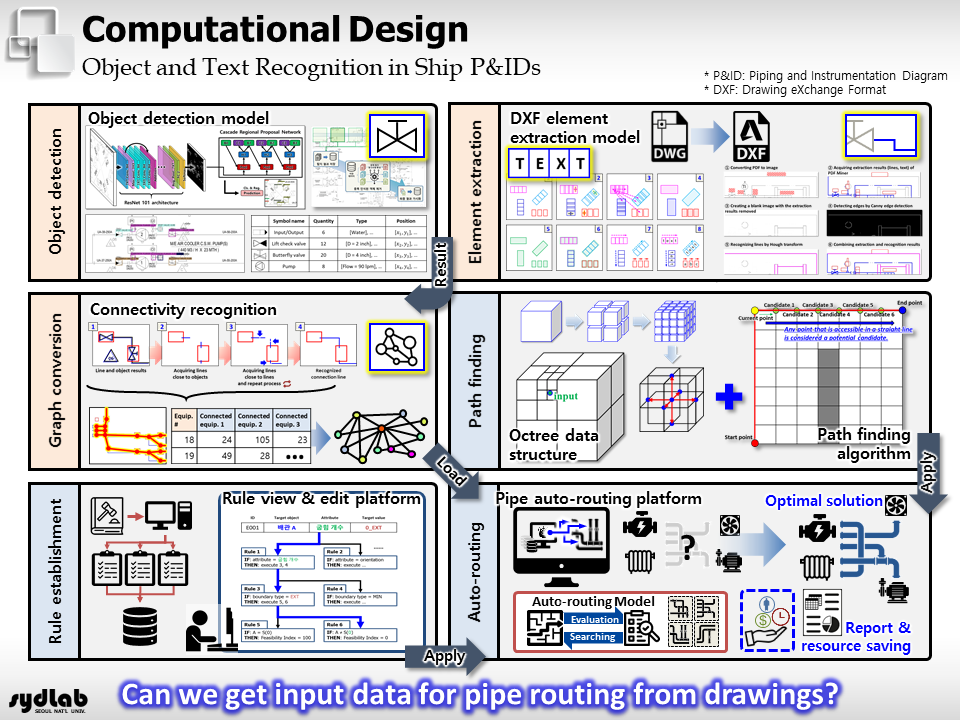
Recognition of Ship P&IDs
We are studying methods for automatically recognizing P&IDs (Piping and Instrumentation Diagrams), which depict the interconnections between equipment and piping. We recognize the equipment, instruments, and piping present in the drawings and automatically convert them into a graph structure. The results can be used as input data for piping routing.
– Recognition of objects and text in diagrams (images, DXF) – Recognition of connection lines in diagrams – Conversion of recognition results into a graph structure
Variable Recognition and Indexing
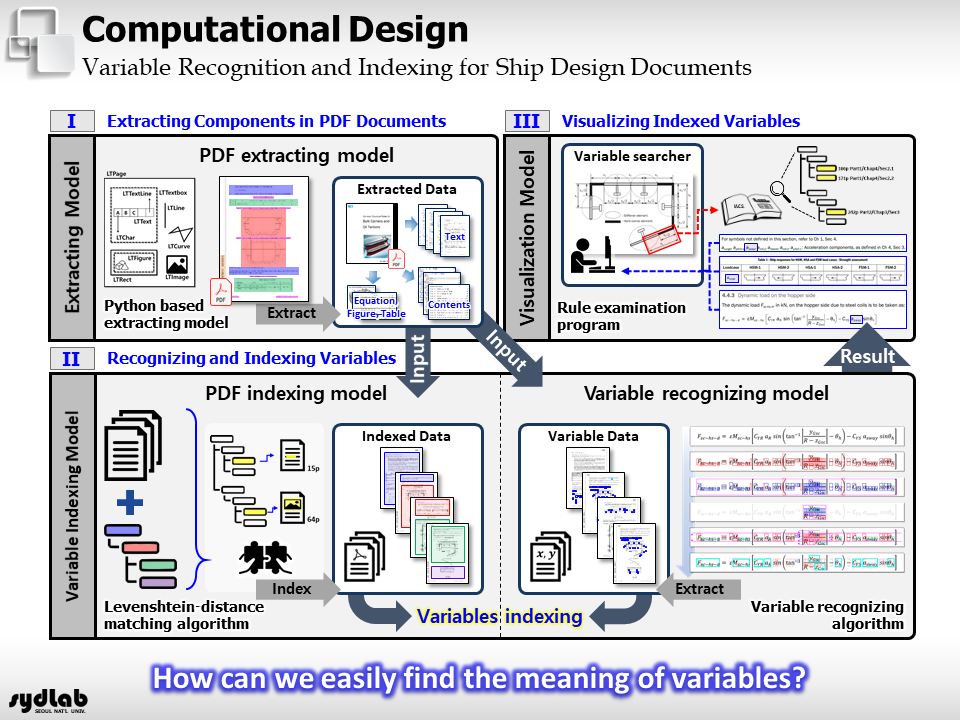
We are studying methods to automatically recognize and index various variables contained in design documents, such as ship regulations. When utilized, this technology helps designers quickly locate the definitions and locations of specific variables within documents, thereby reducing the time required to review design documents.
– Extraction of elements (strings, tables of contents, equations, figures, tables, etc.) from PDF documents – Indexing design documents – Variable recognition and analysis of relationships
Big Data Framework for Shipbuilding
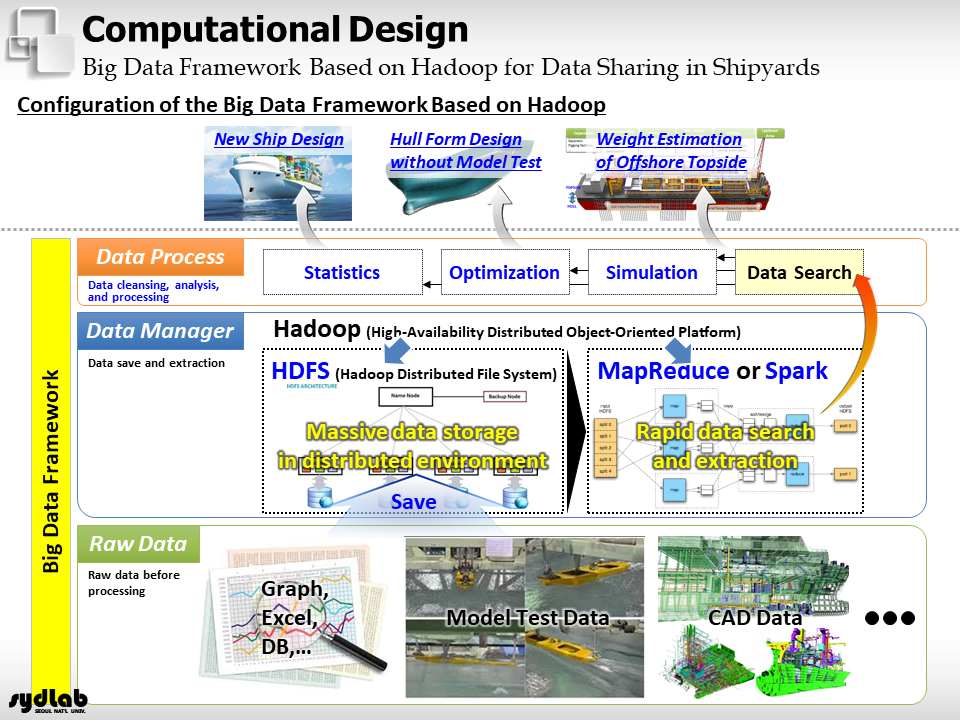
We are studying a Hadoop-based big data framework. We apply big data technologies to various problems in naval architecture and ocean engineering, leveraging the latest tools, including HDFS (Hadoop Distributed File System), MapReduce, and Spark.
– Hadoop-based big data frameworks (HDFS, MapReduce) – Use of third-party modules, including Spark – Big data analysis in shipbuilding and marine industries (design, production, and operation)
Estimation of Marine Weather and Ship Power
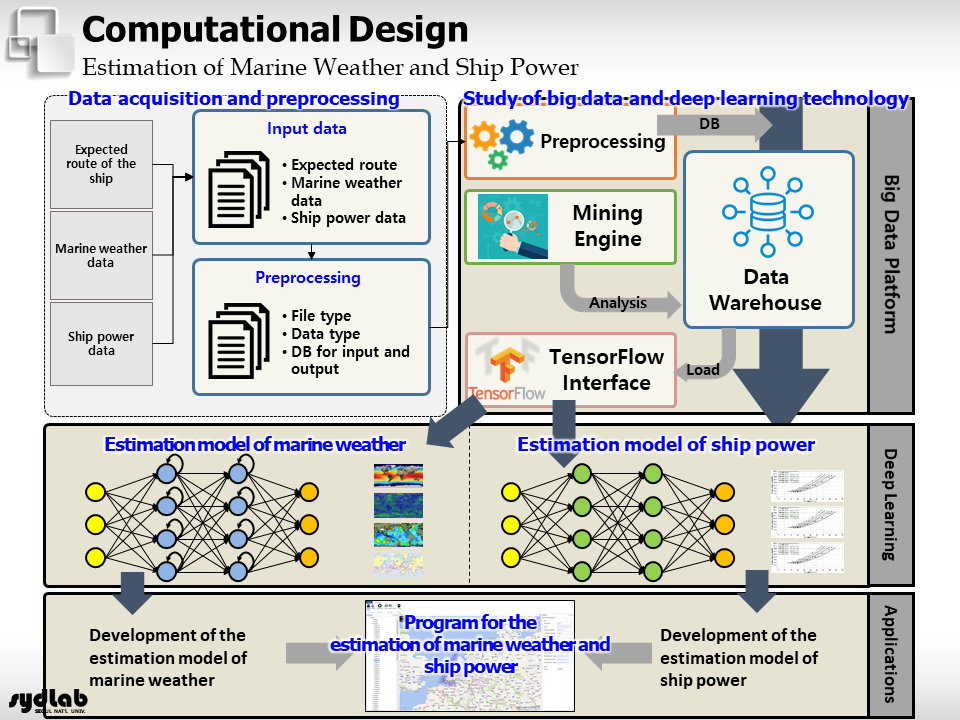
We are studying methods for using big data to estimate marine weather and the required power for ship route planning. In particular, we are estimating marine weather across all maritime regions with high accuracy and forecasting the power required by ships, with the aim of applying these results to route planning.
– Preprocessing for marine weather – Prediction of marine weather using deep learning models – Prediction of ship power requirements and fuel consumption according to marine weather using deep learning models
Ship Operation Analysis
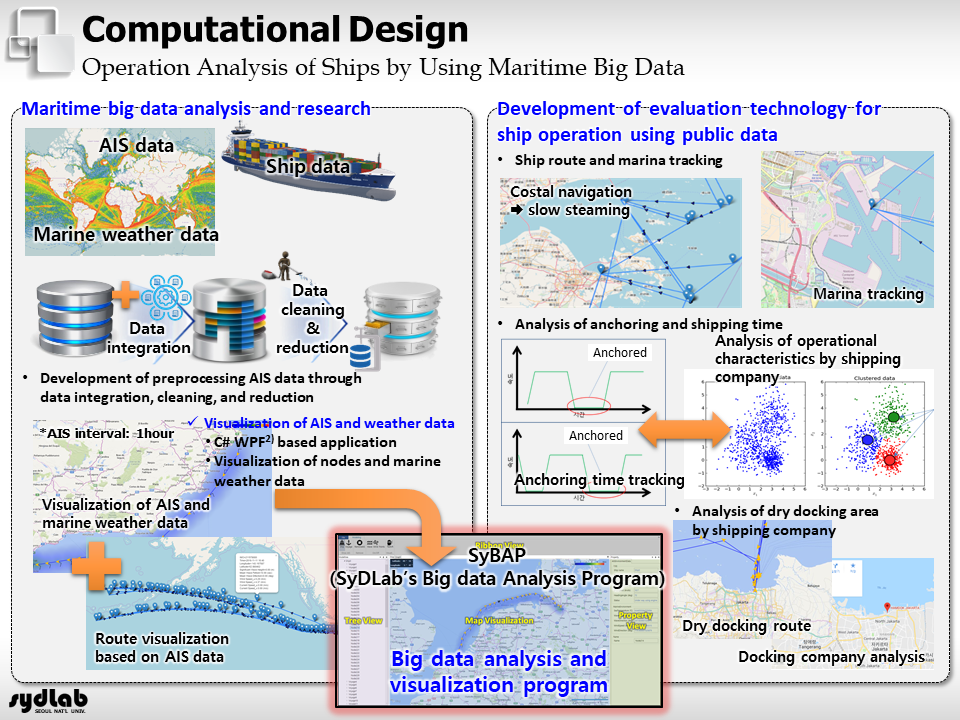
We are studying methods for analyzing ship operations using big data. We analyze operational characteristics and ship efficiency by visualizing their routes and speeds over time through the mapping of AIS (Automatic Identification System) data, which contains ship operational records, alongside marine weather data.
– Preprocessing of AIS and marine weather data – Ship operation analysis based on AIS data – Visualization of operation analysis results
Surrogate Modeling Methods
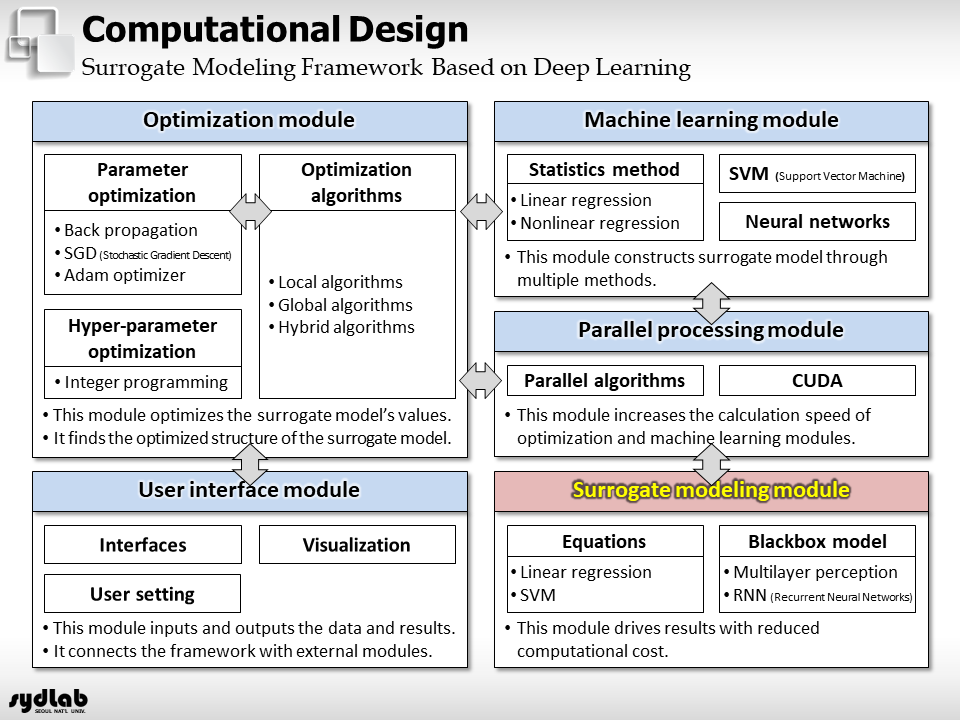
We are studying various surrogate modeling methods to reduce the time required for engineering analyses, including fluid dynamics and structural analyses. In particular, replacing the complex analyses involved in the optimization process with surrogate models can significantly reduce the time required for optimization. We are studying various methods, including selecting training data for surrogate model generation and automatically updating surrogate models.
– Selection of training data for surrogate model generation – Various surrogate modeling methods (traditional methods, deep learning-based methods) – Automatic update of surrogate models
Realistic Visualization of Ship Operations
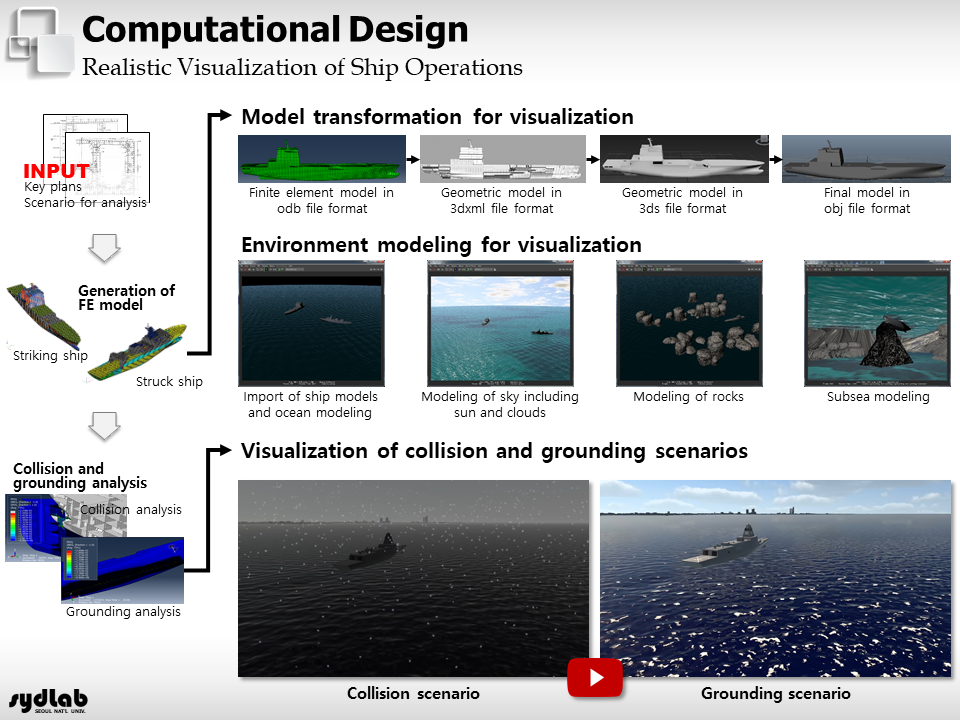
We are studying methods to realistically visualize ship operations. We are working to realistically visualize various objects, including ships, weather conditions, land-based structures, and seabed topography.
– Realistic modeling of ships (commercial ships, naval ships, small ships, etc.) – Realistic modeling of the marine environment (weather, sky, sea, land structures, seabed topography, etc.) – Integration with the big data-based marine weather estimation model – Integration with the ocean simulation facility