We are studying various research projects aimed at maximizing the performance of ships and offshore structures, minimizing costs, and reducing risks by formulating given problems as optimization problems and solving them using optimization algorithms.
We are studying a variety of research projects aimed at advancing design methods through computational mechanics and simulation, including the development of novel methods and the improvement of existing ones. In addition, we are studying a variety of research projects that combine optimization, simulation, and computational techniques to produce more robust and integrated design results. In other words, we are also studying simulation methods that combine analysis, visualization, and hardware.
We are studying various research projects that use the latest artificial intelligence technologies to automate design tasks—traditionally performed manually or semi-automatically by humans—through computerization. In other words, we are studying technologies that go beyond automating simple, repetitive tasks performed by humans to the point where they can replace humans.
We are studying autonomous navigation technologies for smart ships. Specifically, we are studying cutting-edge technologies such as detection, localization, and tracking of maritime obstacles; multi-sensor fusion; collision risk assessment and collision avoidance path generation; and automatic berthing.
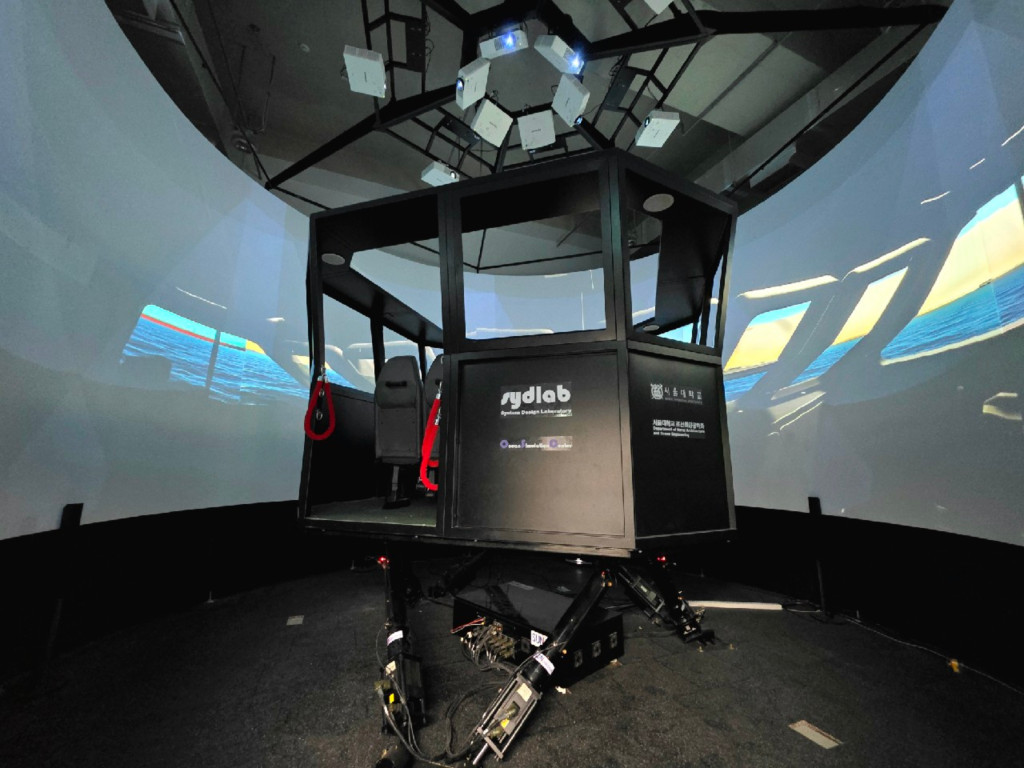
We are utilizing VR/AR technology and simulators to validate design results in environments that closely resemble real-world conditions. VR/AR technology creates a realistic representation of the real world on a computer, while simulators faithfully replicate on-site movements for users. This simulator is designed to be versatile, making it extremely useful for a wide range of problems.