시뮬레이션 기반 설계 (Simulation-Based Design)

다물체 동역학 기반 블록 탑재 시뮬레이션
(Block Lifting Simulation Based on MBD)

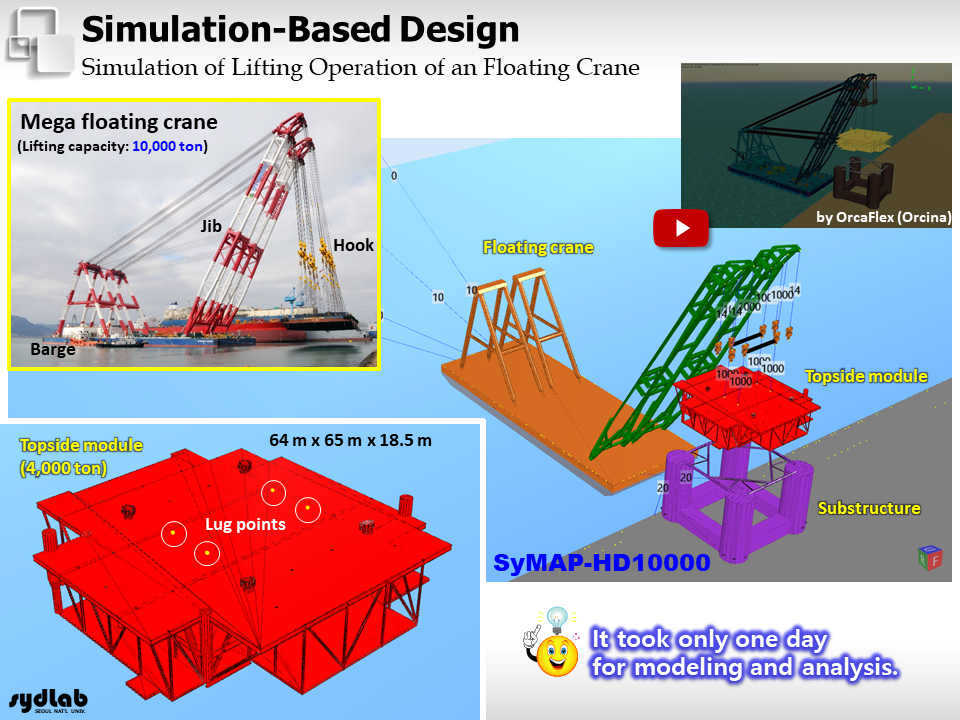
우리는 해상 크레인, 갠트리 크레인 등 조선소에서 대형 크레인을 활용한 블록 탑재 작업의 안전성을 평가하기 위해 고도의 시뮬레이션 방법을 연구하고 있습니다. 이를 위해 본 연구실에서 자체 개발한 조선 전용의 다물체 동역학 프로그램인 SyMAP (SyDLabs Multiphysics Analysis Program)을 활용하고 있습니다.

– 강체/유연체 다물체 동역학 기반 블록의 위치/변형/응력, 와이어 로프에 작용하는 장력 계산
– 블록간, 블록 및 와이어 로프간 충돌 여부 및 충돌력 계산
– 해상 상태에 따른 다양한 유체력 및 계류력 고려

We are studying advanced simulation methods to evaluate the safety of block-lifting operations using large cranes—such as offshore floating and gantry cranes—in shipyards. To this end, we are utilizing SyMAP (SyDLab’s Multiphysics Analysis Program), a multi-body dynamics program specifically designed for shipbuilding and developed in-house by our laboratory.

– Calculation of block position, deformation, and stress, as well as the tensile force acting on wire ropes, based on rigid-body/flexible-body multibody dynamics
– Detection of collisions between blocks and between blocks and wire ropes, and calculation of collision forces
– Consideration of various hydrodynamic forces and mooring forces depending on sea conditions

강화 학습 기반 크레인 자동 제어
(Crane Control Based on DRL)

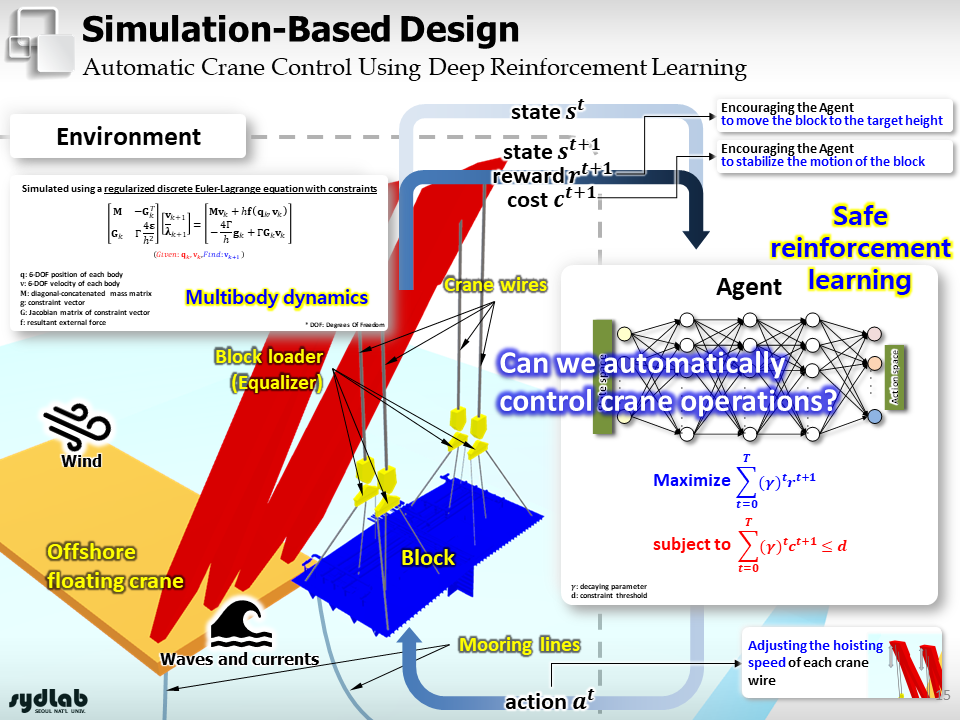
우리는 강화 학습을 기반으로 조선소에서 활용되는 대형 크레인 (해상 크레인, 갠트리 크레인 등)의 자동 제어 방법을 연구하고 있습니다. 블록 탑재 중 블록의 움직임을 최소화하기 위해 크레인 와이어 로프의 감는 속도를 자동으로 제어합니다.

– 강화 학습을 기반으로 한 블록 탑재 및 턴오버 작업의 모델링
– 다물체 동역학 기반 블록의 움직임 및 와이어 로프에 작용하는 장력 계산
– 턴오버 등 복잡한 탑재 작업 지원
– 해상 상태에 따른 다양한 유체력 및 계류력 고려

We are studying methods for the automatic control of large cranes (such as offshore floating cranes and gantry cranes) used in shipyards using reinforcement learning. To minimize block movement during block lifting, we automatically control the winding speed of the crane’s wire ropes.

– Modeling of block loading and turnover operations based on reinforcement learning
– Calculation of block motion and tension acting on wire ropes using multi-body dynamics
– Support for complex lifting operations, such as turnover
– Consideration of various hydrodynamic and mooring forces depending on sea conditions

변형을 고려한 블록 탑재 시뮬레이션
(Block Lifting Simulation Considering Deformation)

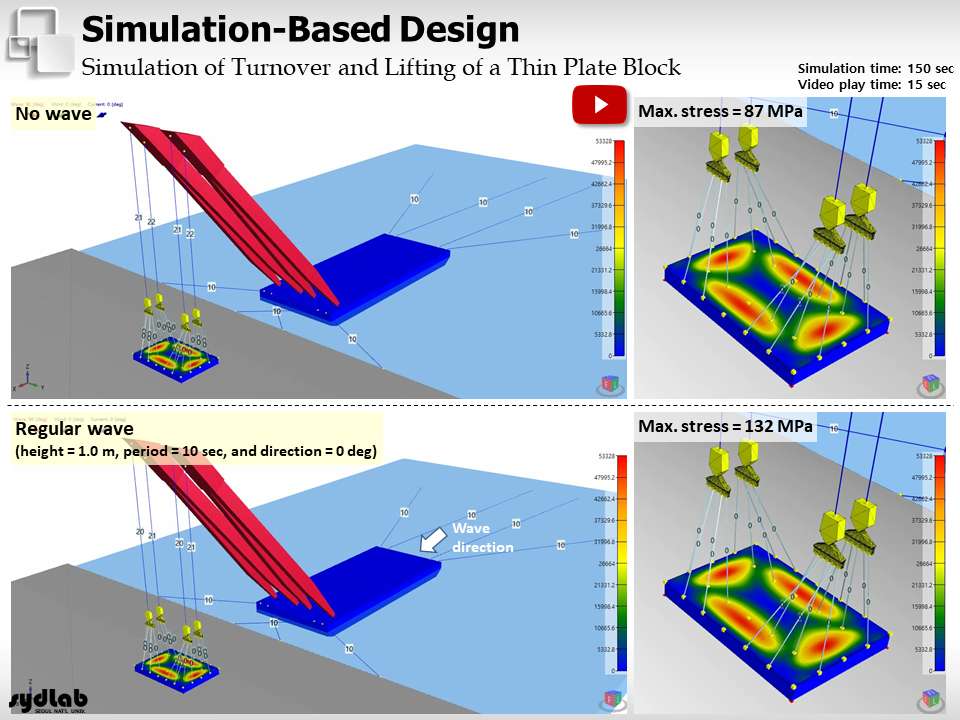
우리는 박판 블록의 탑재 및 반전 작업 중 발생할 수 있는 변형을 모사하기 위해 유연 다물체 동역학 기반의 시뮬레이션 방법을 연구하고 있습니다.

– 유연체 다물체 동역학 기반 블록의 위치/변형/응력, 와이어 로프에 작용하는 장력 계산
– 해상 상태에 따른 다양한 유체력 및 계류력 고려

We are studying simulation methods based on flexible multibody dynamics to model deformations that may occur during the lifting and turning over of sheet blocks.

– Calculation of the position, deformation, and stress of blocks, as well as the tensile force acting on wire ropes, based on flexible multibody dynamics
– Consideration of various hydrodynamic forces and mooring forces depending on sea conditions

충돌을 고려한 블록 탑재 시뮬레이션
(Block Lifting Simulation Considering Collision)

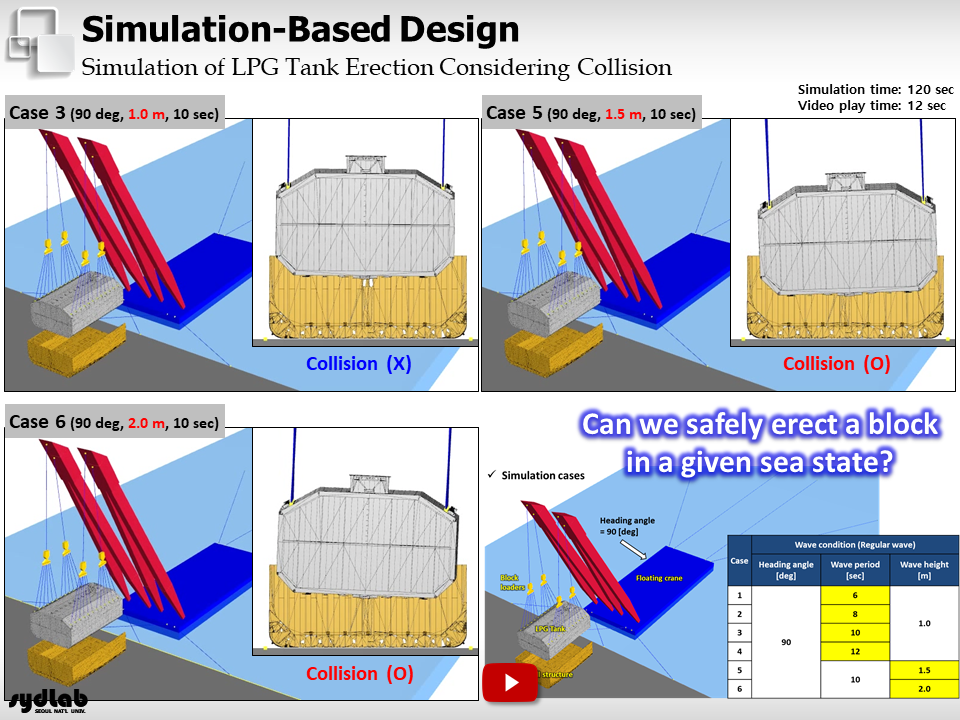
우리는 블록 탑재 중 발생할 수 있는 블록 간 또는 블록과 와이어 로프 간 다양한 간섭 또는 충돌을 고려한 시뮬레이션 방법을 연구하고 있습니다. 충돌이 발생할 경우 충돌 위치와 충돌력을 계산해 구조 해석의 입력 데이터로 출력합니다.

– 블록 간 또는 와이어 로프 간 충돌 여부, 위치 및 충돌력 계산
– 해상 상태에 따른 다양한 유체력 및 계류력 고려
– 충돌 위치 및 충돌력의 출력 기능

We are studying simulation methods that account for various types of interference or collisions that may occur between blocks or between blocks and wire ropes during block lifting. In the event of a collision, the method calculates the collision location and force and outputs this data as input for structural analysis.

– Calculation of whether a collision occurs between blocks or between blocks and wire ropes, as well as the collision location and force
– Consideration of various hydrodynamic forces and mooring forces depending on sea conditions
– Function to output collision location and force

LNG FPSO-LNG선 간 하역 시뮬레이션
(Cargo Offloading Simulation)

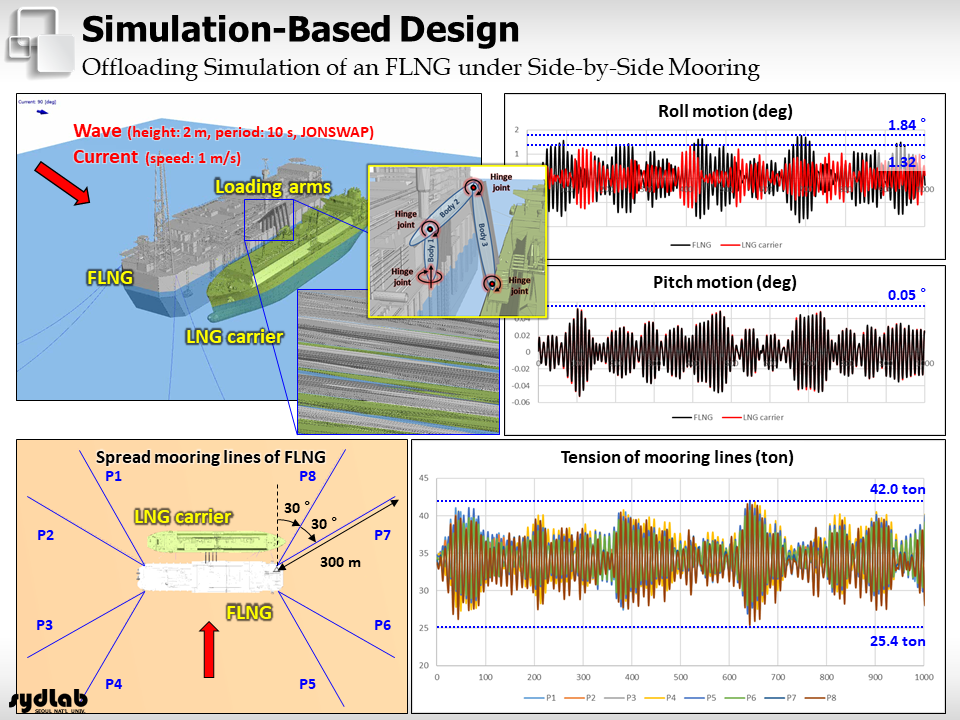
우리는 다물체 동역학을 활용하여 LNG FPSO (FLNG)와 LNG선 간의 화물 하역 시뮬레이션 방법을 연구하고 있습니다. 로딩 프레임을 통해 서로 연결된 LNG FPSO와 LNG선을 다물체 모델로 모델링한 뒤, 다양한 해상 상태에서 그들의 움직임과 계류선에 작용하는 장력을 예측합니다.

– 다물체 동역학 기반 LNG FPSO와 LNG선의 움직임, 계류선에 작용하는 장력 계산
– LNG FPSO, LNG선 간 충돌 여부 및 충돌력 계산
– 해상 상태에 따른 다양한 유체력 및 계류력 고려

We are studying simulation methods for cargo transfer operations between an LNG FPSO (FLNG) and an LNG carrier using multibody dynamics. We model the LNG FPSO and the LNG carrier—which are connected via a loading frame—as a multibody system, and then predict their motion and the tension acting on the mooring lines under various sea conditions.

– Calculation of the motion of the LNG FPSO and LNG carrier, as well as the tension acting on the mooring lines, based on multibody dynamics
– Calculation of the likelihood of a collision between the LNG FPSO and LNG carrier, as well as the collision forces
– Consideration of various hydrodynamic forces and mooring forces depending on sea conditions

선박 침수 시뮬레이션
(Ship Flooding Simulation)

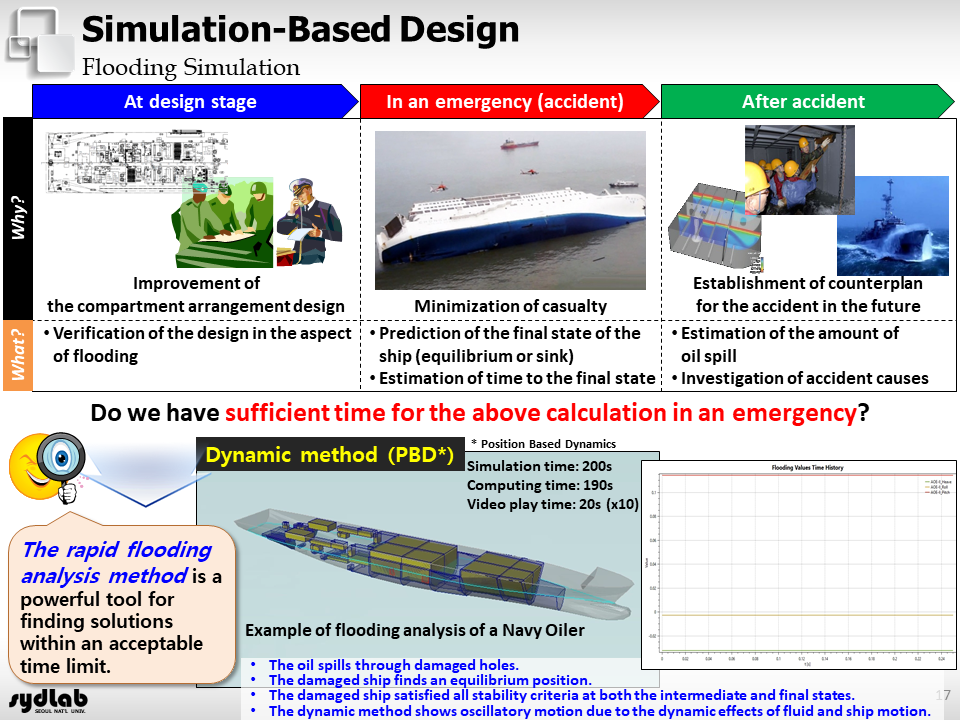
우리는 충돌, 좌초 등으로 손상된 선박의 침수 시뮬레이션 방법을 연구하고 있습니다. 손상부 및 개구부를 통해 유입/유출되는 유량을 고려해 선박의 자세, 평형 상태 및 복원성을 예측합니다.

– 손상부 및 개구부를 통해 유입/유출되는 유량 계산
– 기밀/통풍 구획에 대한 압력 계산 고려
– 다물체 적분법을 활용한 복잡한 구획의 용적 계산
– 오일 유출량 계산
– 시간에 따른 선박의 자세 및 평형 상태 계산
– 손상 시 복원성 평가

We are studying methods for simulating the flooding of ships damaged by collisions, groundings, and other incidents. We predict the ship’s attitude, equilibrium state, and stability by considering the flow entering and exiting through damaged areas and openings.

– Calculation of inflow and outflow rates through damaged areas and openings
– Consideration of pressure calculations for watertight and ventilated compartments
– Volume calculation for complex compartments using the multi-body integration method
– Calculation of oil spill rates
– Calculation of the ship’s attitude and state of equilibrium over time
– Assessment of damage stability

선체 인양 시뮬레이션
(Shipwreck Salvage Simulation)

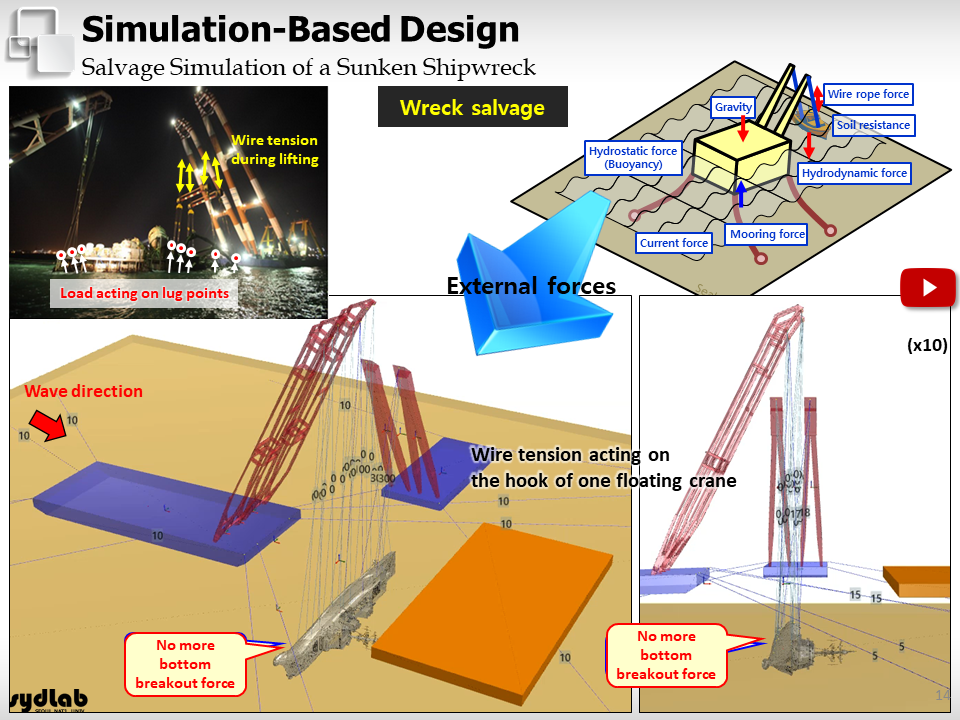
우리는 해저에 가라앉은 침몰 선체의 인양 시뮬레이션 방법을 연구하고 있습니다. 다양한 인양 방법 (해상 크레인, 잭업 바지 등)에 대해 해상 상태에 따른 인양 중 선체의 움직임과 와이어 로프에 작용하는 장력을 예측합니다.

– 다물체 동역학 기반 침몰 선체의 움직임, 와이어 로프에 작용하는 장력 계산
– 해상 크레인/잭업 바지, 침몰 선체 간 충돌 여부 및 충돌력 계산
– 침몰 선체를 체인으로 감아 올리는 인양 방법 지원
– 해상 상태에 따른 다양한 유체력 고려

We are studying simulation methods for salvaging a sunken shipwreck from the seabed. For various salvage methods (such as offshore cranes and jack-up barges), we predict the shipwreck’s movement during salvage and the tensile forces acting on the wire ropes as a function of sea conditions.

– Calculation of the motion of the sunken shipwreck and the tension acting on wire ropes based on multi-body dynamics
– Calculation of collision probability and forces between offshore cranes/jack-up barges and the sunken shipwreck
– Support for salvage methods involving the hoisting of the sunken shipwreck using chains
– Consideration of various hydrodynamic forces depending on sea conditions

승객 대피 시뮬레이션
(Ship Evacuation Simulation)

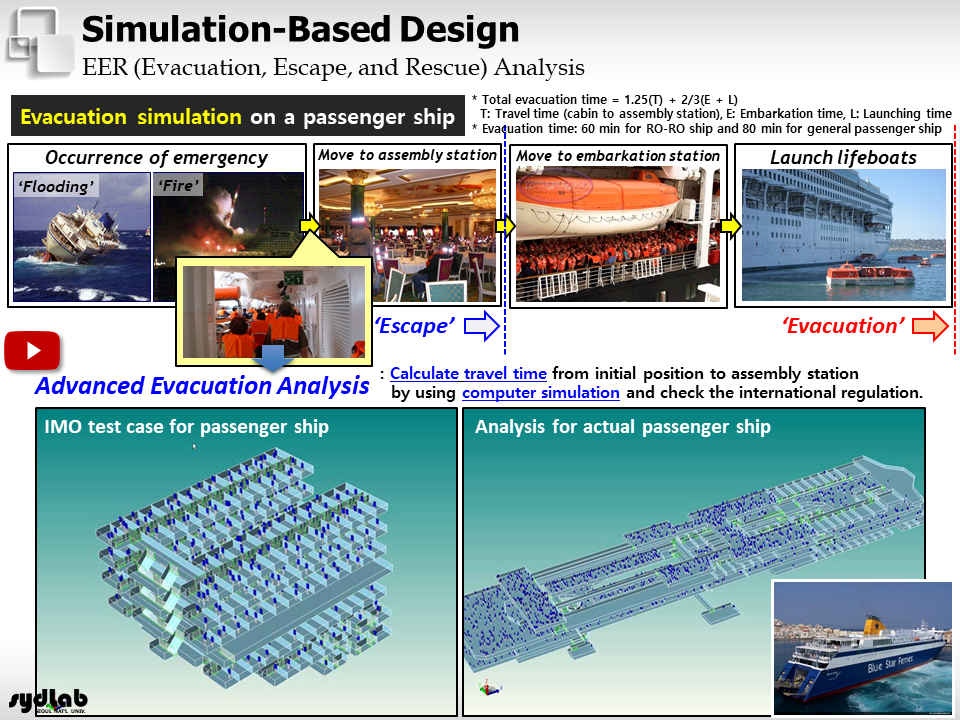
우리는 여객선의 EER (Evacuation, Escape, and Rescue) 해석을 위한 승객 대피 시뮬레이션 방법을 연구하고 있습니다. 특히, 침수 상황 등 선박의 동적 상태를 고려해 승객의 움직임을 모사하는 등 현실감 있는 결과를 얻기 위해 노력하고 있습니다.

– DEVS 기반 시뮬레이션
– 주변 상황을 고려한 인간의 행동 모델 연구
– 침수 등 선박의 동적 상태 고려해상 상태에 따른 다양한 유체력 및 계류력 고려

We are studying passenger evacuation simulation methods for EER (Evacuation, Escape, and Rescue) analysis of a passenger ship. In particular, we are striving to obtain realistic results by simulating passenger movements while accounting for the ship’s dynamic state, including during flooding.

– DEVS-based simulation
– Research on human behavior models that consider the surrounding environment
– Consideration of the ship’s dynamic state, such as flooding

해석-가시화-하드웨어 통합 시뮬레이션
(Integrated Simulation)

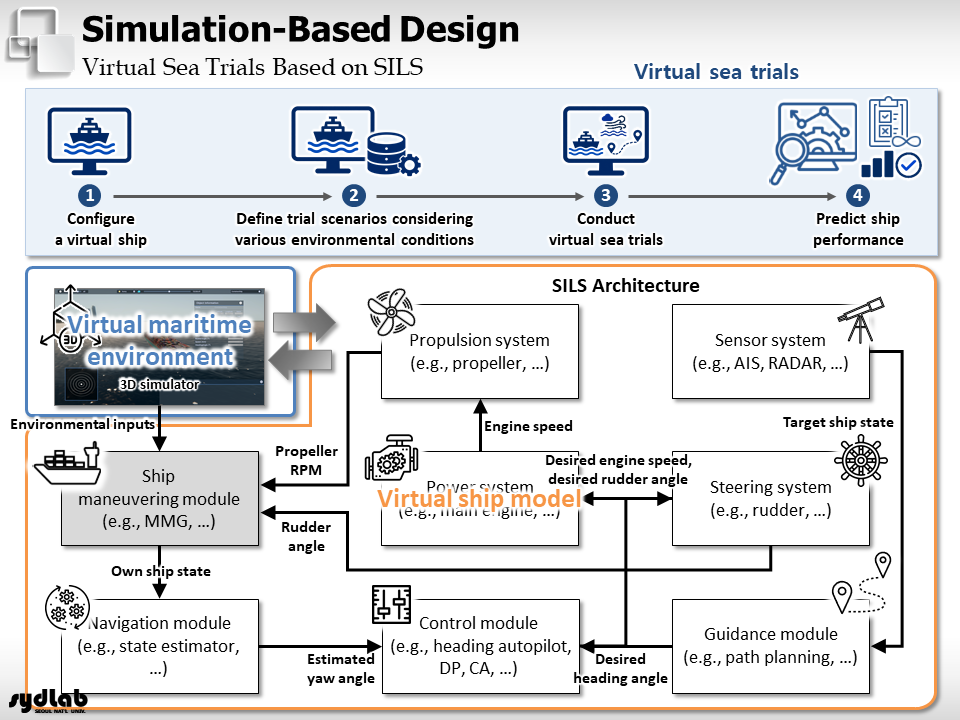
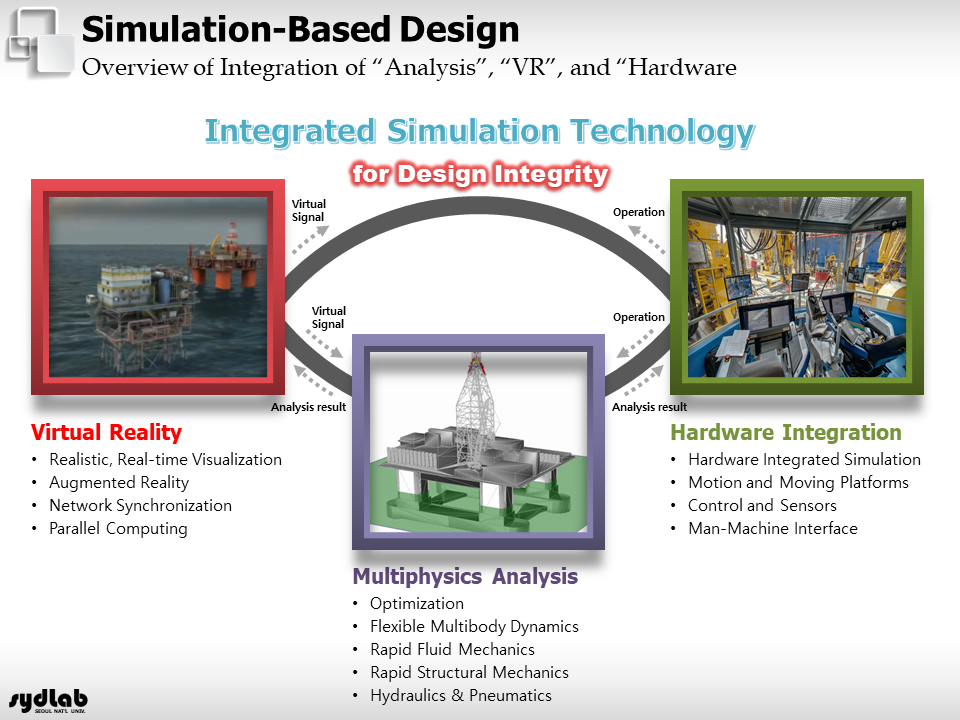
우리는 설계 결과의 정합성 및 완결성을 추구하기 위해 해석, 가시화 및 해드웨어가 통합된 시뮬레이션 방법을 연구하고 있습니다. 다양한 공학 해석을 실시간으로 실행하고 그 결과를 보다 실감나게 가시화하는 동시에 시뮬레이션의 입출력으로 하드웨어를 연동합니다.

– 통합 시뮬레이션 인터페이스
– 쾌속 해석을 위한 실시간 병렬 처리 또는 근사 모델링
– VR/AR 기반 실감 가시화
– 다양한 HMI (Human Man Interface) 장비 연동

We are studying simulation methods that integrate analysis, visualization, and hardware to ensure the consistency and completeness of design results. We execute various engineering analyses in real time, visualize the results in a more immersive way, and simultaneously integrate hardware as input and output for the simulations.

– Integrated simulation interface
– Real-time parallel processing or surrogate modeling for high-speed analysis
– VR/AR-based immersive visualization
– Integration with various HMI (Human-Machine Interface) devices